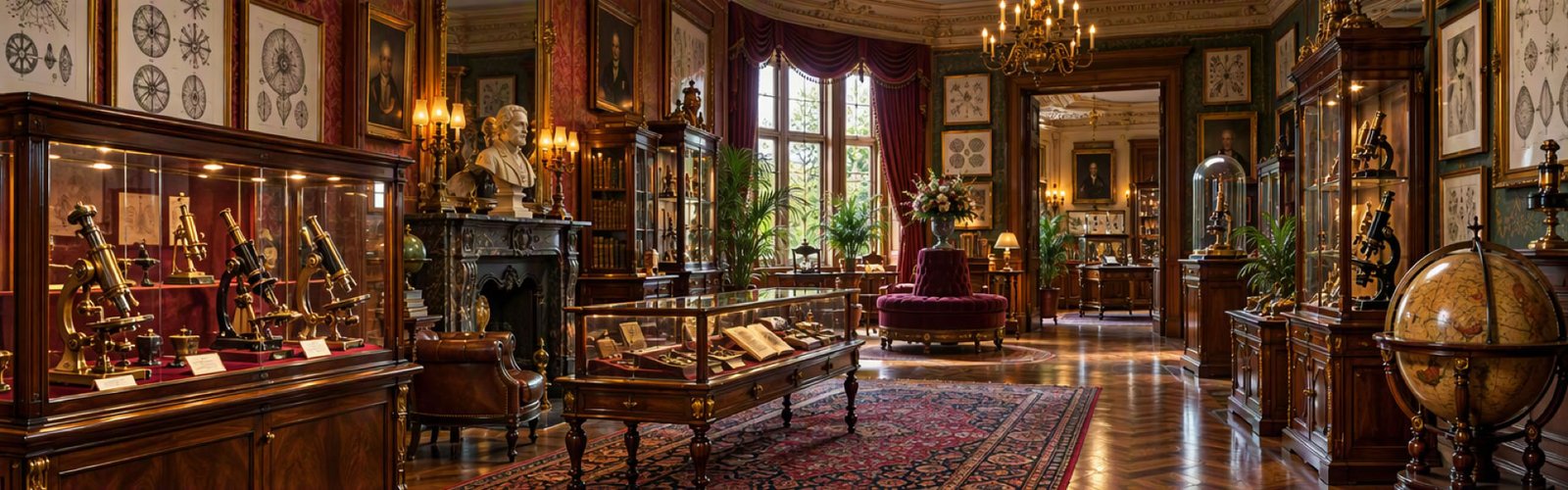
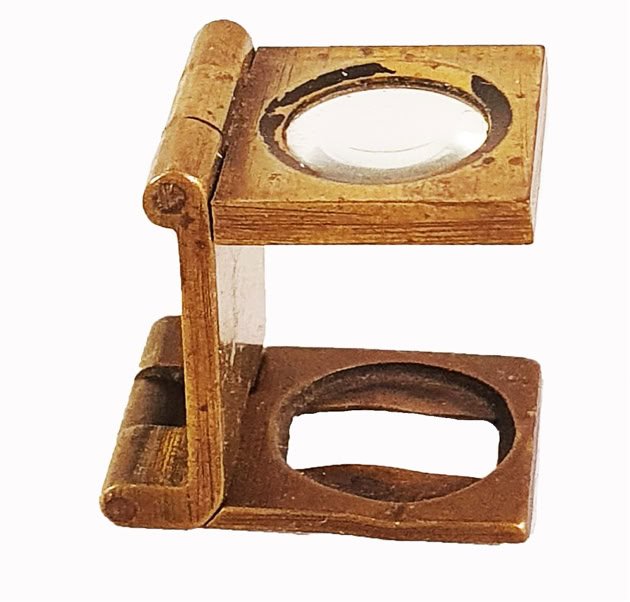
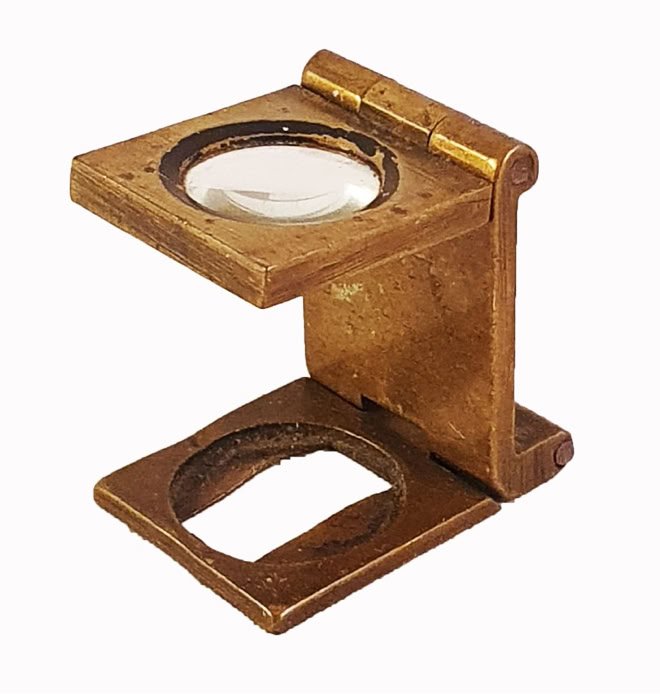
Microscope 237

(unassigned maker; folding linen tester; late 19th century to the early 20th century)
Microscope 237 is a folding linen tester, also known as a linen prover, dating from the late 19th or early 20th century. These instruments were used to count threads in woven fabrics, with the number of threads per unit of length serving as an indicator of cloth quality. Early examples typically featured a simple, unmarked aperture in the base, whereas later versions often incorporated calibrated markings. The folding design allowed the instrument to lie flat for storage and transport; when opened for use, it formed a C-shaped frame. Linen testers of this type had been manufactured and sold by numerous companies since at least the early 19th century and were rarely signed by their makers or retailers (Figure 1).

Figure 1. Folding linen testers engraved in the catalogues of several companies: (A) Palmer (1840); (B) Negretti and Zambra (1859); (C, D) William McAllister (1867); (E, F) Negretti and Zambra (1870s e 1885); (G) James Queen (1870 and 1872); (H) Ernest Goldbacher (1879); (I) B. Kahn & Son (c. 1890); (J) Bausch and Lomb (1892); (K) Arthur Thomas (1914); (L) Bausch and Lomb (1914); (M) A. Clarkson & Co (1920s); (N) Emille Deyrolle (1931); and (O, P, Q) Gallenkamp (c. 1939)