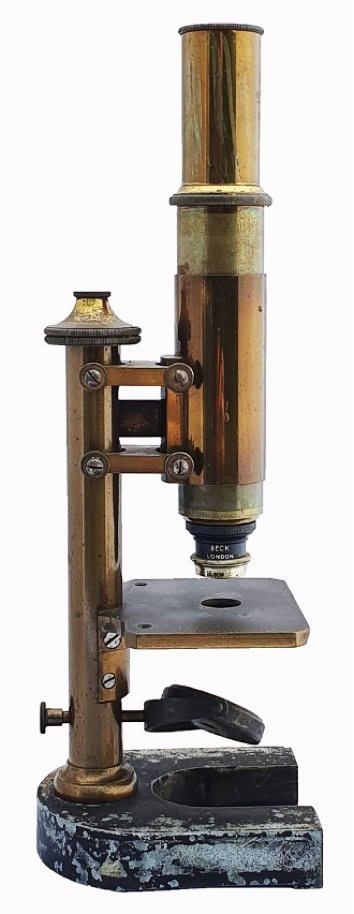
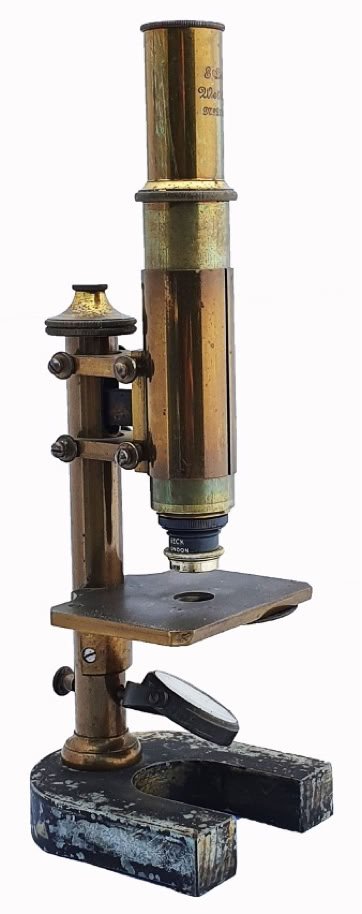
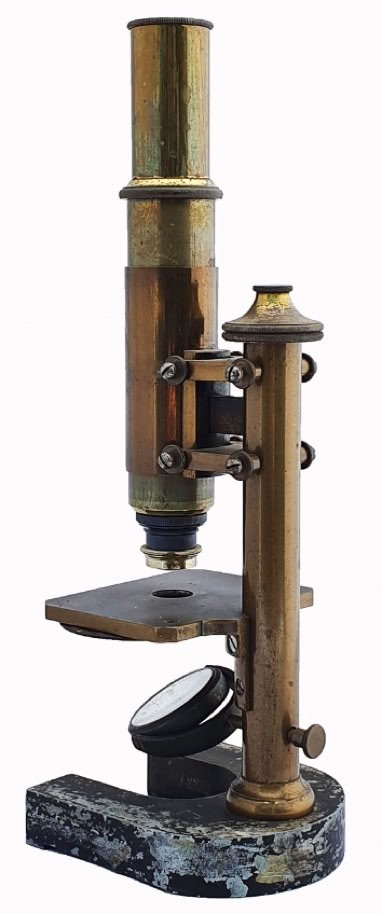
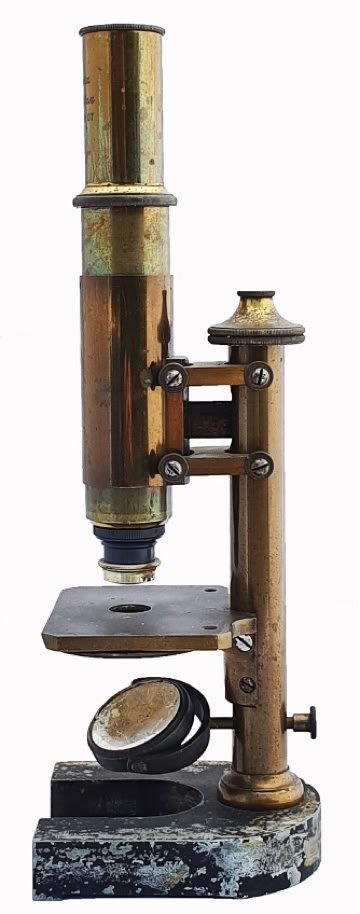
Microscope 96
(Ernst Leitz; Stativ V model; 1891)
In 1849, Carl Kellner founded the Optical Institute in Wetzlar, Germany. Within a few years, microscopes had become the firm's principal products. In 1865, the company employed an engineer named Ernst Leitz, who soon became a partner. Leitz took over the business in 1869 and renamed it the Optical Institute of Ernst Leitz. Following his death in 1920, his son, Ernst Leitz II, assumed sole ownership of the company. During the 1970s, the European and American microscope industries faced increasing competition from Japanese manufacturers, particularly Olympus and Nikon, whose modern microscope designs combined high quality with comparatively low prices. Several established instrument makers consequently closed, merged or were acquired. In 1974, Wild Heerbrugg acquired a majority interest in Leitz Wetzlar, although the company continued developing new ranges of compound microscopes. The last member of the Leitz family retired from the board of directors in 1986. In early 1987, Ernst Leitz Wetzlar GmbH and Wild Heerbrugg AG merged to form the Wild Leitz Group. The group was subsequently reorganised in 1988, when Leica Camera was separated as an independent company. In 1990, the merger of Wild Leitz Holding AG with the Cambridge Instrument Company resulted in the creation of Leica Holding B.V. The Leica name continues to be associated with microscopes and other scientific optical instruments.
Microscope 96 is engraved on its tube with the inscription “E. Leitz Wetzlar, No. 20907”. Its serial number indicates a manufacturing date of approximately 1891. In the company's 1893 catalogue, this model is listed as Stativ V.
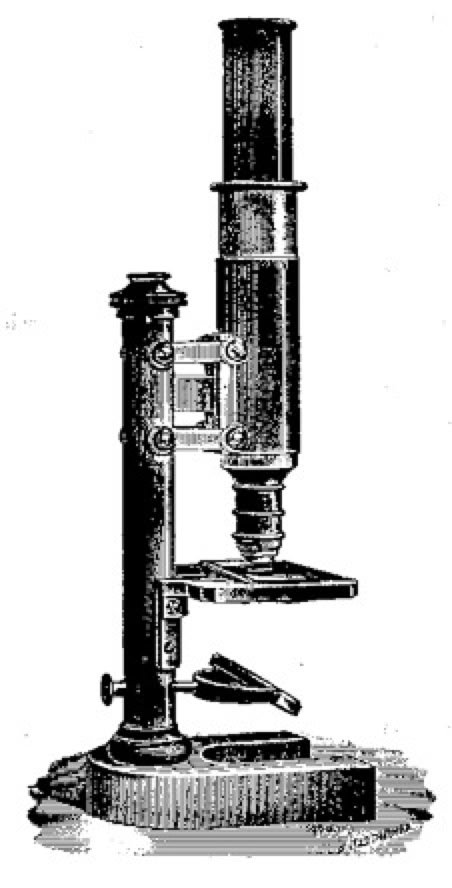
Figure 1. Ernst Leitz’s ‘Stativ V’ microscope model as engraved on the company’s 1893 catalogue.